Strength Basics: Why Two Dumbbells Beat a Complicated Plan
No membership, no machines, no confusion. The four movements that build real strength at home — and the simple rule that makes them work.
By Jonas Reed · Sep 24, 2026 · 6 min read
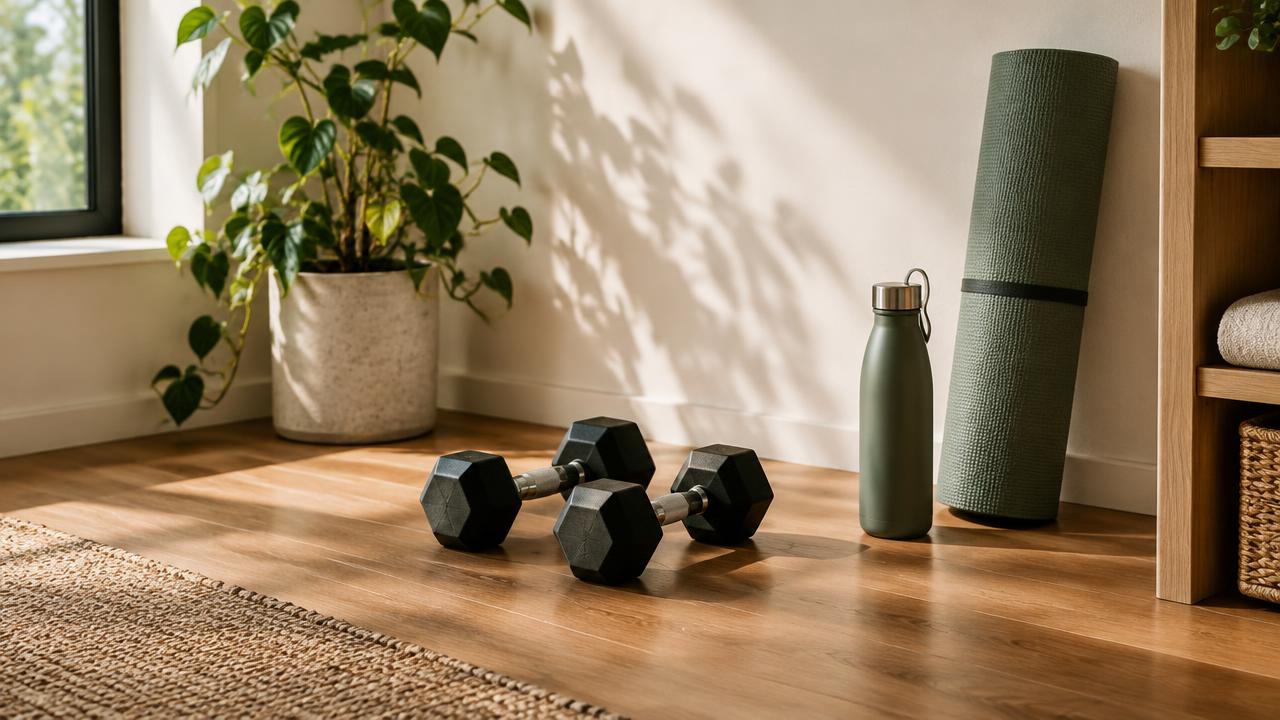
Strength training has a marketing problem. It is sold as a maze of machines, splits, and apps, when the truth is far simpler: your body understands four or five basic movements, and it gets stronger when you ask it to do them a little more often, with a little more weight, over a long period of time. Two dumbbells and a patch of floor cover nearly all of it.
The four movements that matter
From the shop
Fitness, picked for this story
Squat: sit down onto a chair and stand back up, dumbbells held at your sides. Hinge: a Romanian deadlift, soft knees, weights sliding down your thighs, back flat. Push: a floor or bench press, or a push-up if the weights feel far away. Pull: a one-arm row, hand braced on a chair. That is the whole alphabet. Everything else is punctuation.
Three sets of eight to twelve repetitions of each, twice a week, is a complete program. It fits in thirty minutes, including the part where you stare out the window between sets.
The only rule: a little more, a little often
Progressive overload sounds technical but means one thing — last week you did ten reps, so this week you try eleven. When twelve feels easy, the weight goes up slightly. Muscles do not read calendars or care about programs; they respond to a signal that says the world got marginally heavier, so they had better adapt.
Why simple wins
Complicated plans fail because they require motivation, and motivation is weather. A simple plan requires only a floor and a decision you made once. Strength built this way is quiet and cumulative — one day you notice the grocery bags feel lighter, the stairs feel shorter, and your back no longer files a complaint after long drives. That is the whole promise, and it keeps.
Enjoyed this one?
The shop is one short hop away — colorful companions for a considered life.